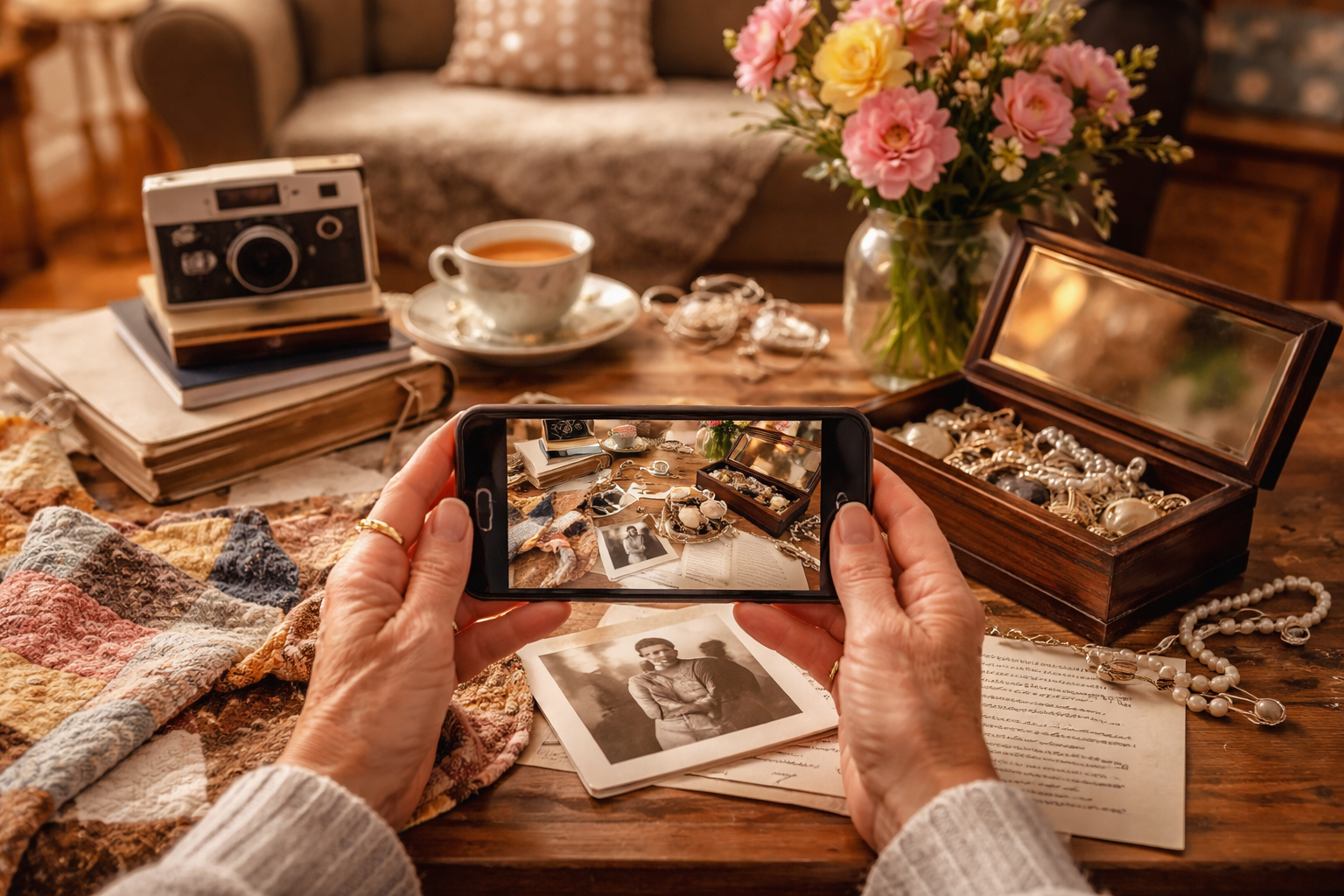
Why the Stories Behind Family Items Get Lost, And How to Preserve Them
Every family has items that carry meaning beyond their physical form. A watch worn every day for decades. A dining table where birthdays were celebrated. A ring passed down through generations.
But over time, something important disappears. The stories behind those items fade. And eventually, the object remains, but the meaning is lost.
How family history quietly disappears
Most stories are passed down verbally. They are told at dinner tables, during holidays, or in casual conversation. Rarely are they written down.
When the person who holds those memories passes away, the details often vanish with them.
Future generations may inherit the item, but not the context. They may know it belonged to someone important, but not why it mattered.
Why the story matters more than the object
Without context, sentimental items can lose emotional weight. A tool becomes just a tool. A necklace becomes just jewellery. A box of letters becomes clutter.
When meaning is lost, items are more likely to be sold, discarded, or forgotten.
Preserving the story preserves the value.
Common stories that disappear
- Where an heirloom originally came from
- Why a particular person received a specific item
- What event made the item meaningful
- How an item was restored, built, or preserved
- Family traditions connected to an object
These details are rarely documented formally. But they are the parts future generations care about most.
How to preserve the meaning behind your belongings
1. Add short written notes
A few sentences explaining why an item matters can transform how it is received. You do not need a long autobiography. Just context.
2. Record the origin story
Where did it come from? Who owned it first? Why was it important at the time?
3. Explain your decision
If you are assigning the item to someone specific, explain why. That explanation can prevent both confusion and resentment.
4. Keep it organised
Stories written on scraps of paper or stored separately from the item often get lost. A central, organised system makes preservation easier.
Where Who Gets What helps
Who Gets What is not just about assigning items. It is about preserving meaning.
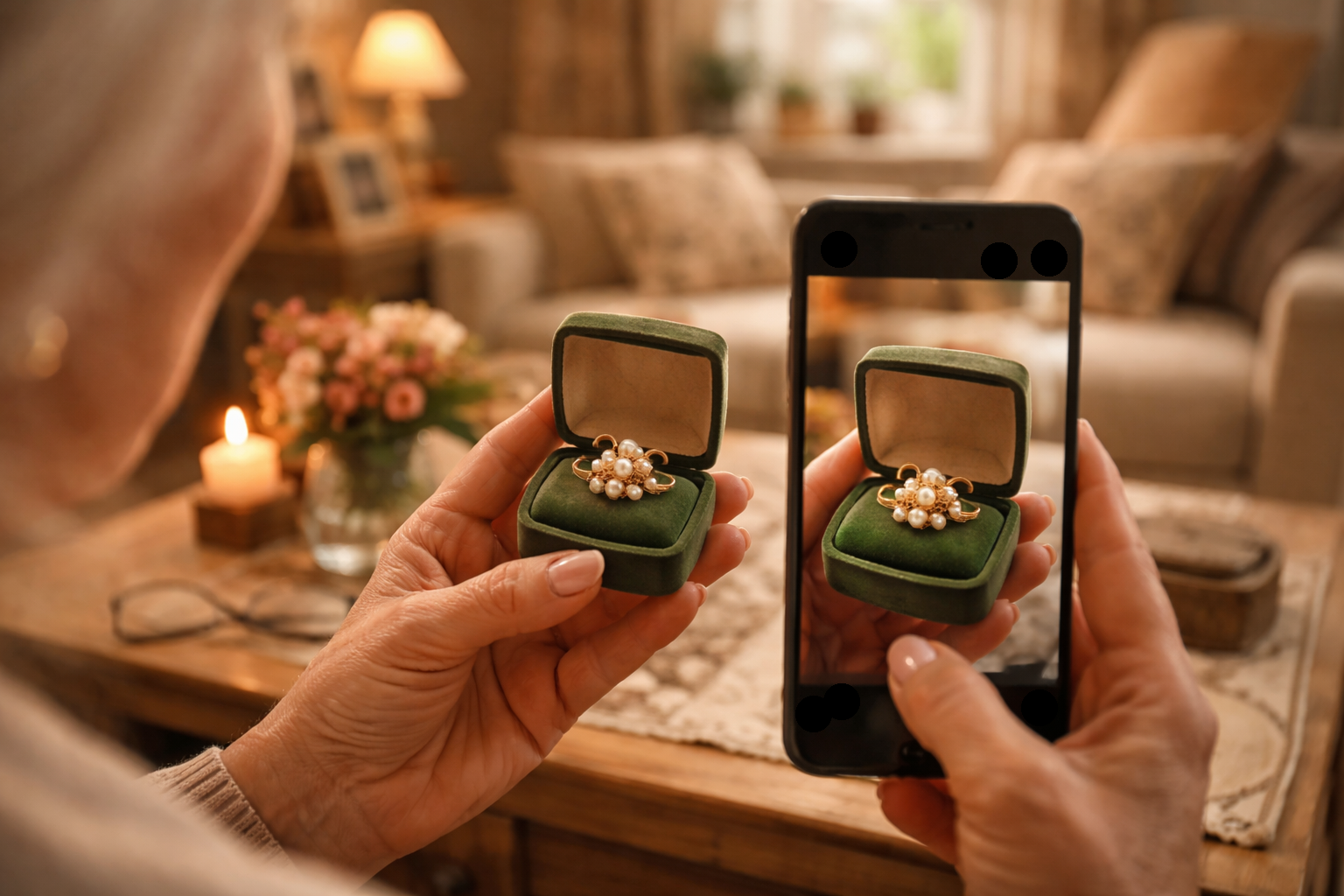
- Attach photos to each item
- Write notes about its history
- Explain why it matters
- Record who should receive it
- Export a clear, structured record
Instead of passing down objects without context, you pass down stories with clarity.